Portfolio
I developed my personal website as a central platform to showcase my professional portfolio, resume, and technical articles focused on frontend and backend development. The project was built in 2025 using Next.js, with a strong emphasis on performance, SEO optimization, and responsive design across all devices.
To support scalable content management, I designed and implemented a custom admin panel powered by PostgreSQL, allowing me to easily manage projects and blog posts. Media assets are handled through Cloudinary, ensuring efficient image storage and delivery.
This website now serves as my main space for sharing projects, experimenting with modern technologies, and publishing articles as I continue to grow as a developer. It is designed to be clean, maintainable, and easy to expand with new features in the future.
Year
2026
Category
Website

I built my personal website as a central place to present my professional portfolio. The site includes my resume, selected projects, and articles where I share insights and experience in frontend and backend development.
The project was developed in 2025 and took approximately one month to complete. On the frontend, I used Next.js as the main framework, along with Cloudinary for managing and storing media assets. The website is fully responsive, optimized for SEO, and designed to perform well across modern devices.
I originally purchased a design concept several years ago, and this project became an opportunity to rethink and modernize it. The goal was to create a clean, well-structured portfolio that reflects my current skills and makes it easy for others to explore my work.
To keep the project future-proof, I focused on modern technologies, including Tailwind CSS for styling, performance optimizations, and a flexible structure that allows me to quickly add new projects or articles. As a result, the website became a solid personal platform that I can easily maintain and expand.
Problem
I began the project by focusing on the core structure and essential pages. After completing the initial HTML templates, I realized that managing content manually would not scale well. To efficiently handle projects and blog posts, I needed a dedicated admin panel.
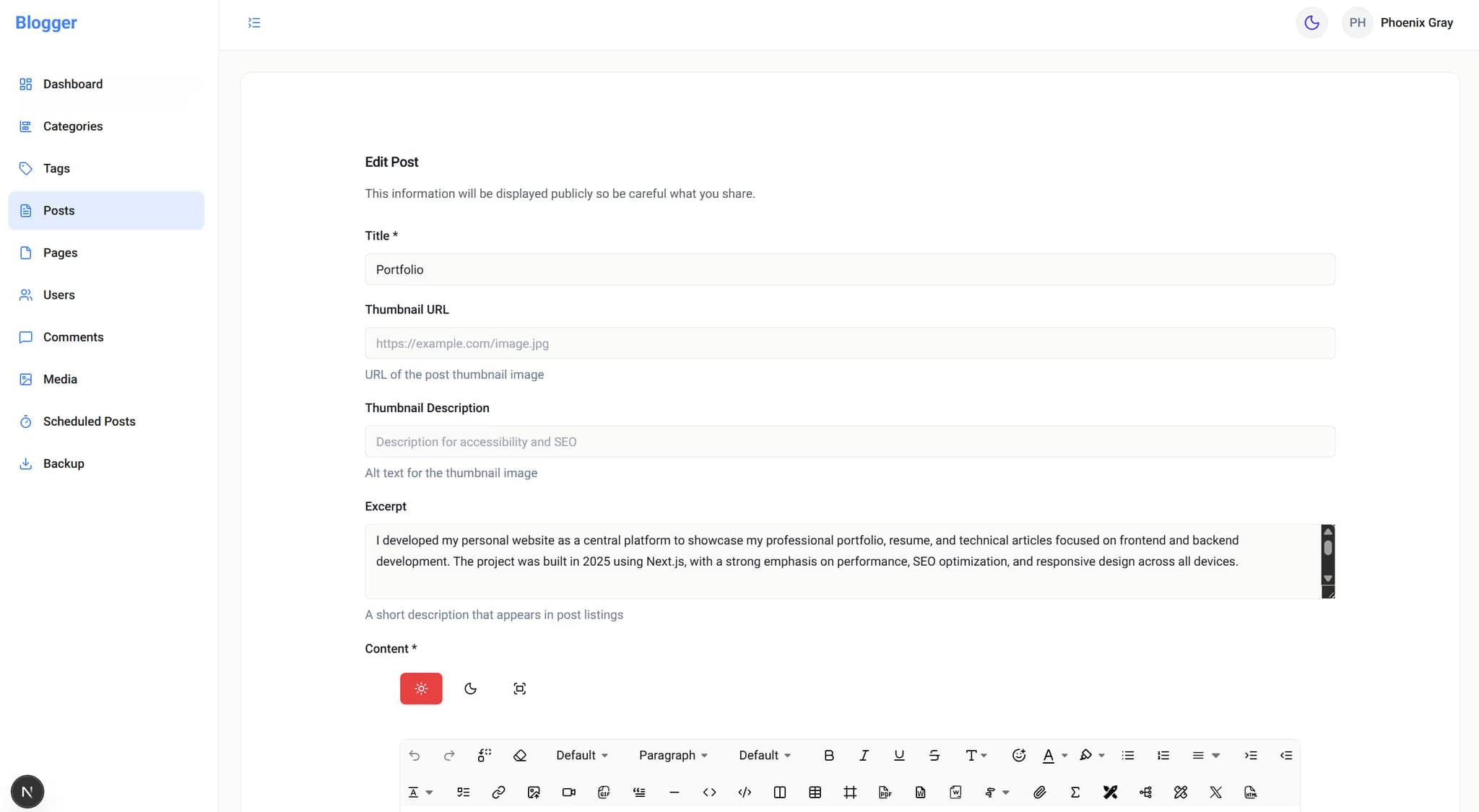
This led me to design and develop a custom dashboard with PostgreSQL as the database, along with both backend and frontend logic for content management. During this phase, I spent time refining the overall architecture to ensure the project would remain maintainable and extensible in the future.
In addition, I wanted to experiment with animations and modern frontend techniques while still maintaining good performance, accessibility, and SEO standards. The final stage involved deployment, testing, and optimization to ensure the site met performance and search engine requirements.
Project Goal
The primary goal of this project was to create a simple, clean, and professional website where I could:
Showcase my projects
Highlight selected works directly on the homepage
Publish articles while learning new technologies
Before development began, I carefully considered the technology stack, content structure, and timeline. While additional features such as comments or a gallery may be added later, the initial focus was on delivering a stable and functional product as efficiently as possible.
Solution
I divided the development process into clear stages. First, I implemented the layout and UI using Tailwind CSS, which allowed me to rapidly build a consistent theme and reusable components. Tailwind proved to be an effective tool for maintaining clean styles and optimizing development speed.
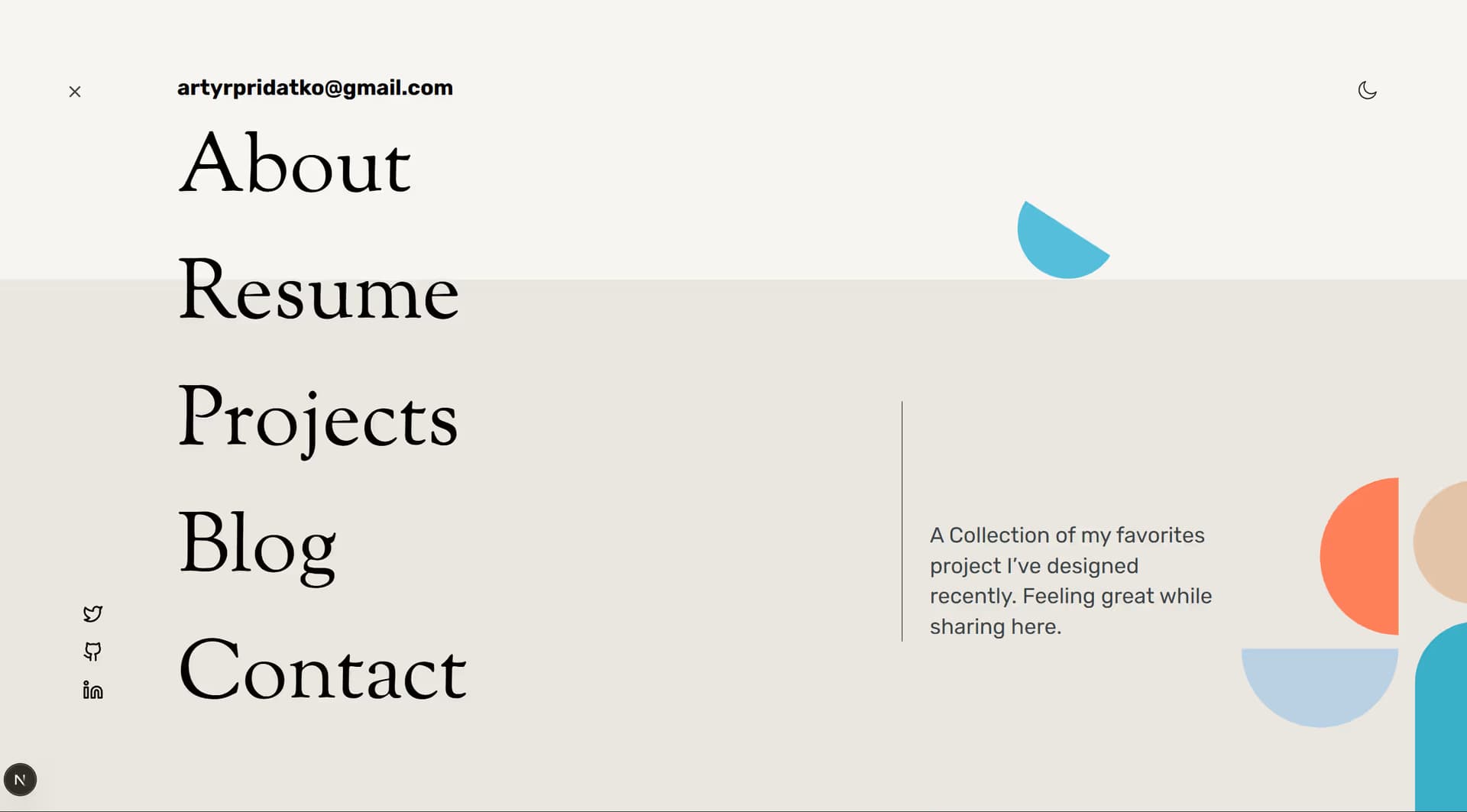
Next, I designed the database schema and built an admin dashboard to manage the landing page content. Once that was complete, I added full support for projects and blog posts, including image and gallery management through Cloudinary.
Although I encountered some challenges while working with Next.js, the framework ultimately helped streamline development and improve performance. Its structure and features allowed me to build the project faster while maintaining a high level of code quality.
Result
The website was completed in under one month and became a valuable hands-on experience in managing a full project lifecycle—from design and architecture to deployment and optimization.
This platform now serves as my primary space for publishing articles, showcasing projects, and experimenting with new tools, animations, and ideas. Whether I’m sharing practice projects or production-ready solutions, this website reflects my growth as a developer.
I hope visitors find the content useful, informative, and enjoyable to explore.