Losos
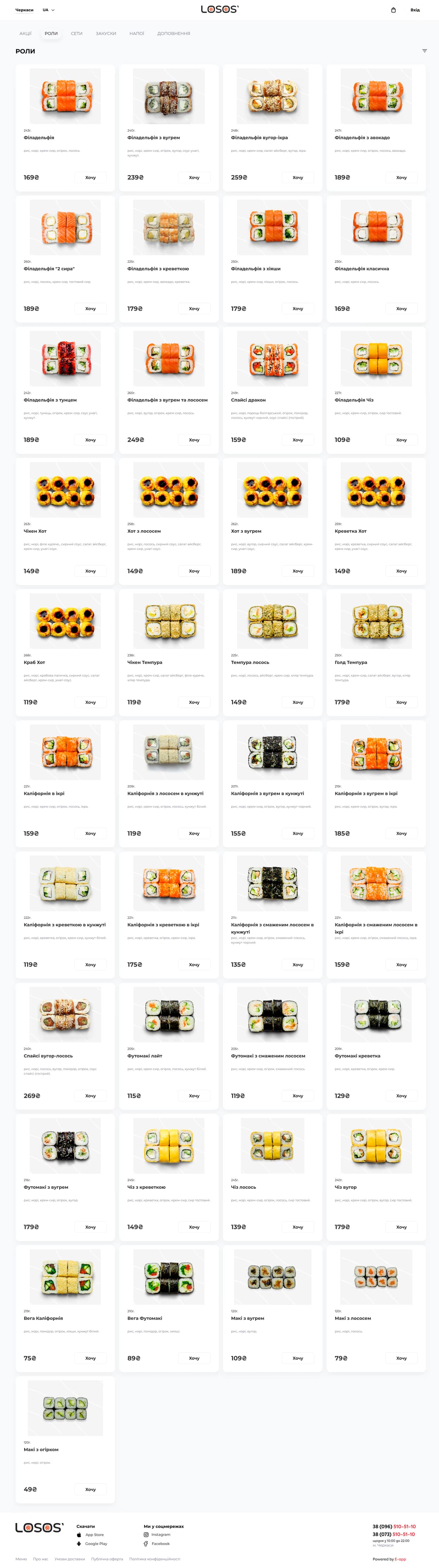
Losos is a high-performance online sushi ordering platform developed for a real food delivery business. The project was built with a strong focus on SEO, fast initial page load, and a clean, user-friendly interface. Using Next.js and Node.js, the website delivers optimized static and server-rendered pages, ensuring excellent visibility in search engines and smooth user experience across devices.
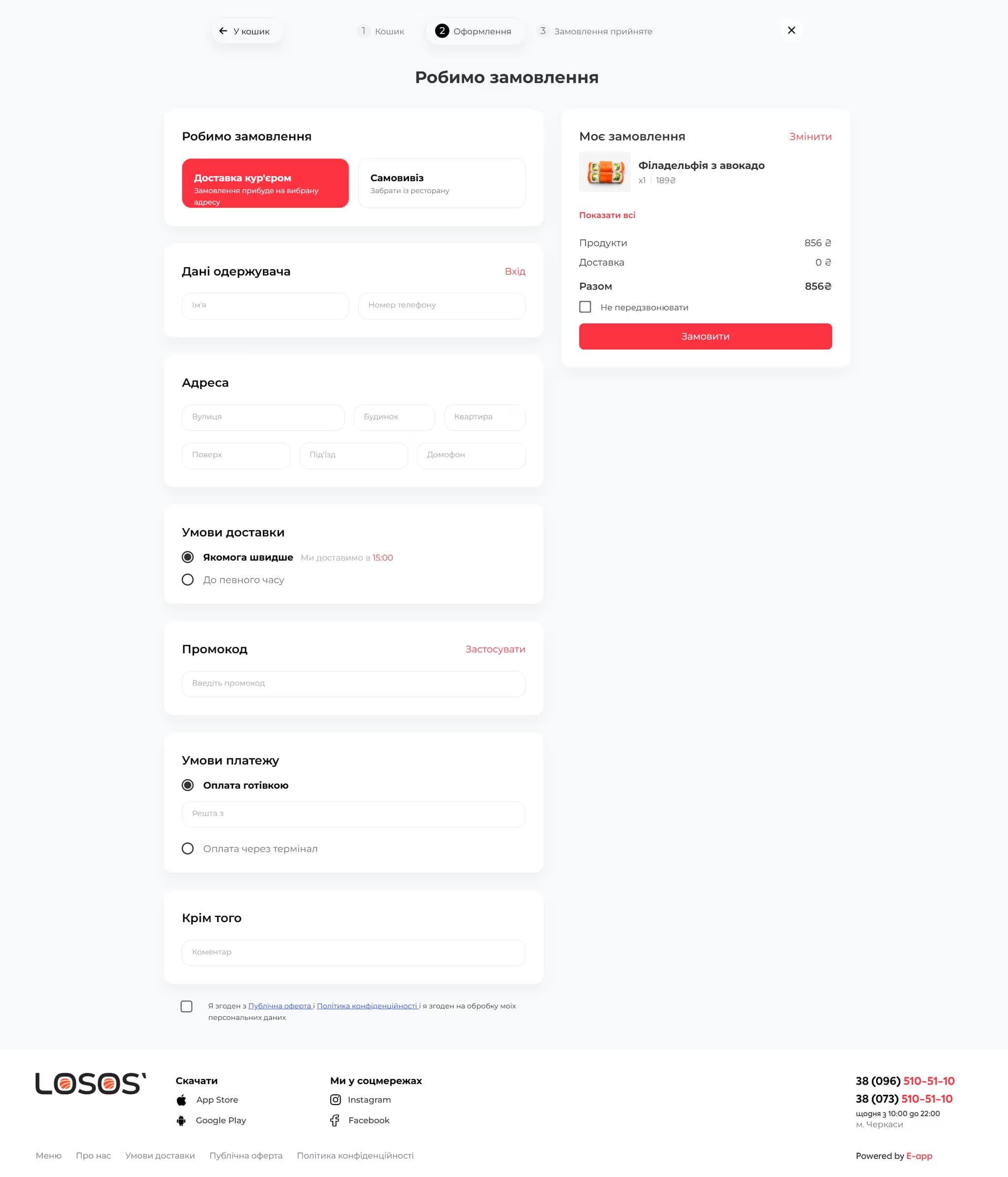
The platform allows customers to register, place orders, save preferences, and track order history. Features such as promotions, discounts, product recommendations, and city/language selection were implemented to increase engagement and conversion. A custom UI component system was created to support flexible branding, allowing the client to easily adapt colors, logos, and layout elements without rebuilding the application.
To ensure reliability and scalability, the project was deployed on a VPS with Nginx caching and optimized frontend performance. An integrated admin panel enables full control over products, categories, SEO content, and promotions. The final solution proved stable under high traffic and continues to serve real users in production, meeting both technical and business goals.
Year
2026
Category
E-commerce
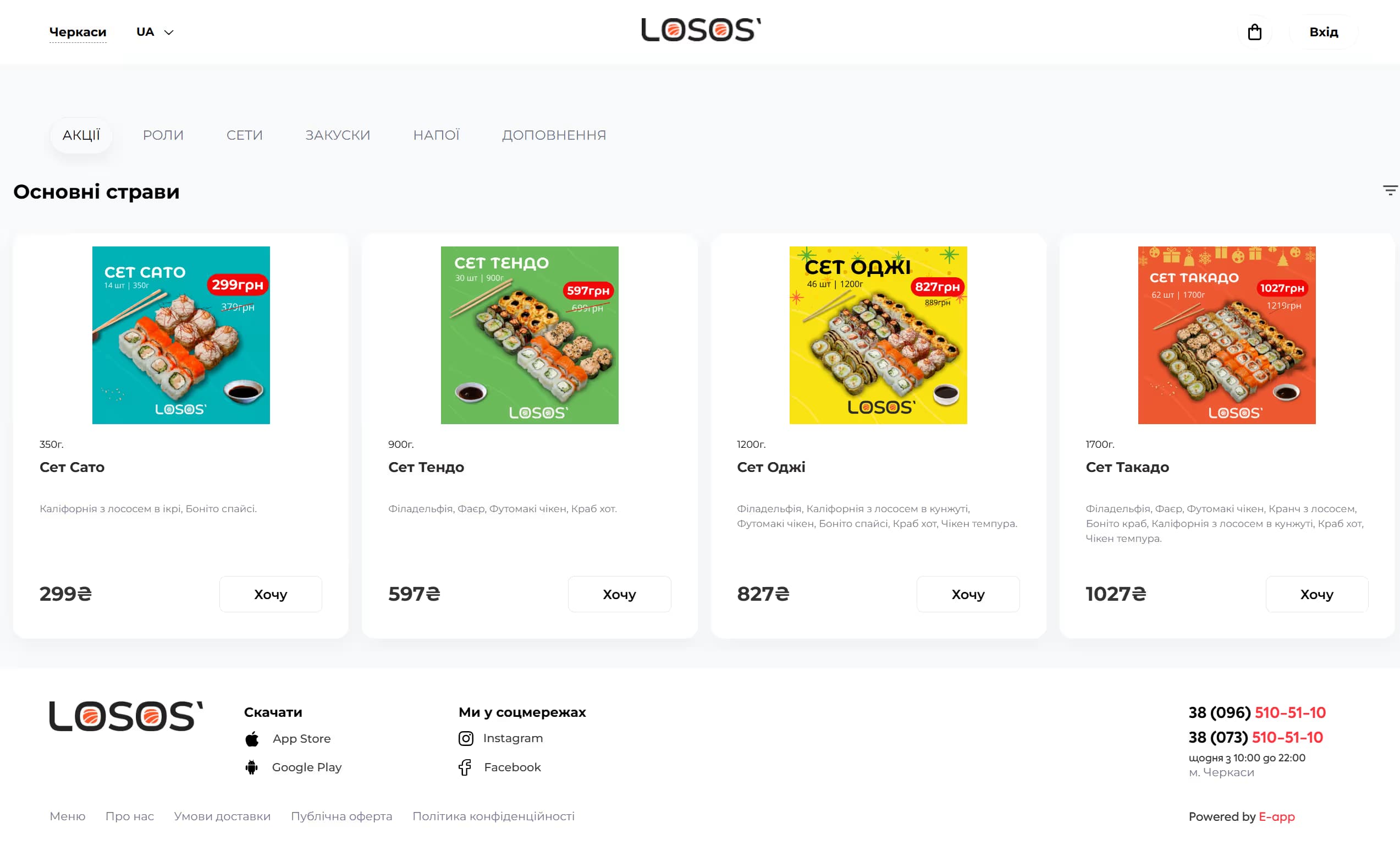
Losos is an online food-ordering platform specializing in sushi, rolls, drinks, and appetizers. I worked on this project while being part of the IThinkers team, where I contributed to building a fast, scalable, and SEO-optimized web application for a real business.
The client’s main goals were strong SEO performance, high loading speed, and an intuitive UX/UI that works seamlessly across devices. The website operates fully online and supports a complete ordering flow from product selection to checkout.
Project Overview
Industry: Food delivery / Restaurant
Platform: Web application
My Role: Full-stack developer
Company: IThinkers
Technologies: Next.js, Node.js, MySQL, Nginx, VPS
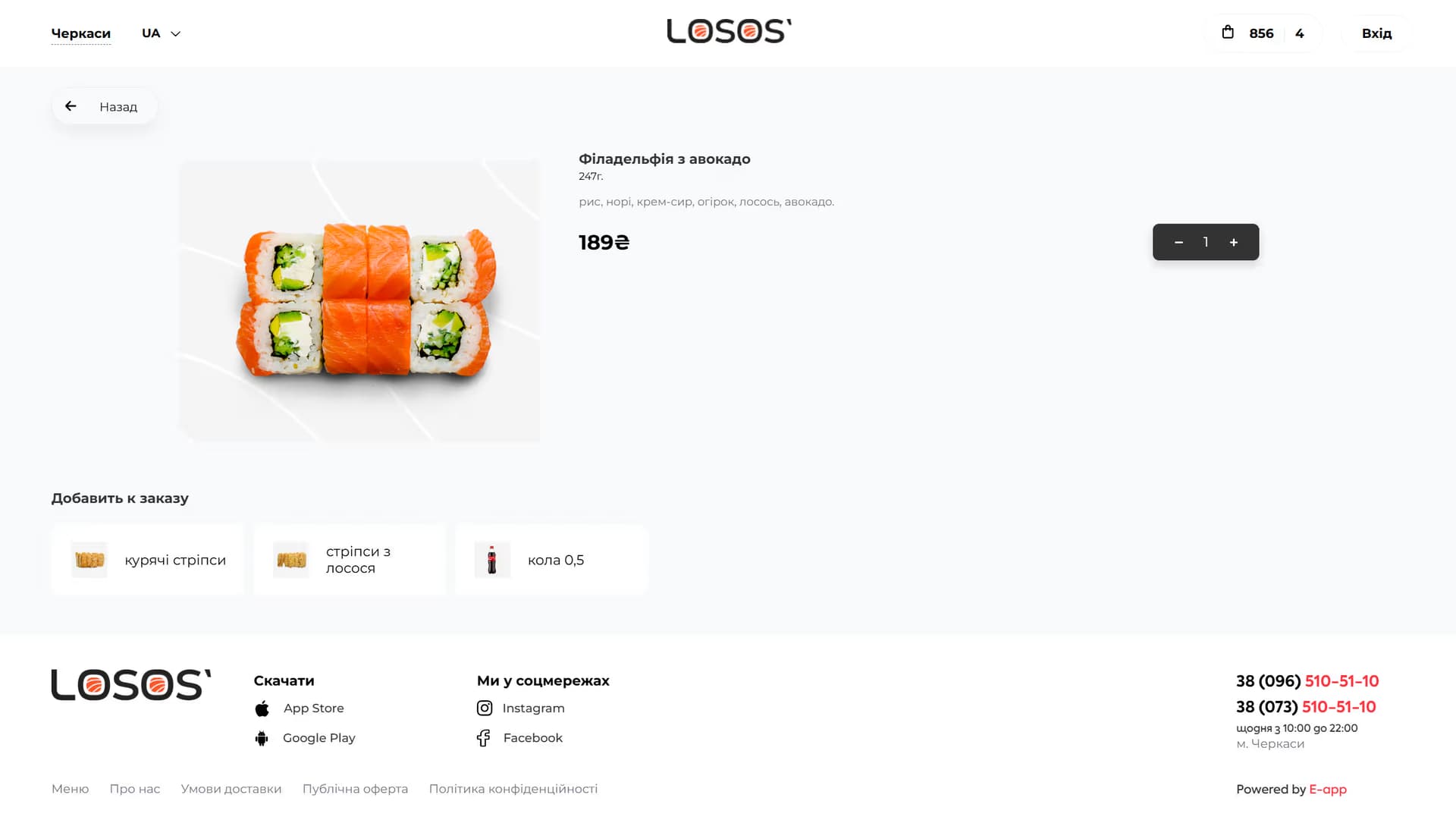
Challenges
Before working on Losos, most of my experience was focused on React SPA applications. However, for a business that invests heavily in customer acquisition, classic SPA solutions are often not enough.
The key challenges were:
Fast initial page load for SEO and ads
Optimized assets and server-side rendering
Correct integration of Google Tags and analytics
High performance under heavy traffic
Flexible design system that can be customized per client
Solution
To meet SEO and performance requirements, I chose Next.js with server-side rendering and static generation where possible. The backend was built with Node.js, and MySQL was used to store orders, users, and related business data.
The project was deployed on a VPS with:
Nginx caching
Frontend caching strategies
Optimized asset delivery
This setup ensured fast page loading and stable performance even during peak traffic.
UI / UX & Design System
The website was built using a template-based design system:
Custom reusable UI components
Client-specific branding (colors, logo, typography)
Easy customization without breaking the core layout
This approach allowed quick adjustments when the client wanted to change visuals or content.
Features
The platform includes a wide range of user-focused features:
User registration and authentication
SMS-based login and verification
Cookies for session persistence (24 hours)
Dark theme support
User preferences saved across visits
Handling unfinished orders
City and language selection
Product recommendations (drinks, sauces, appetizers)
Discounts, weekly sales, and loyalty programs
Order history and favorite items
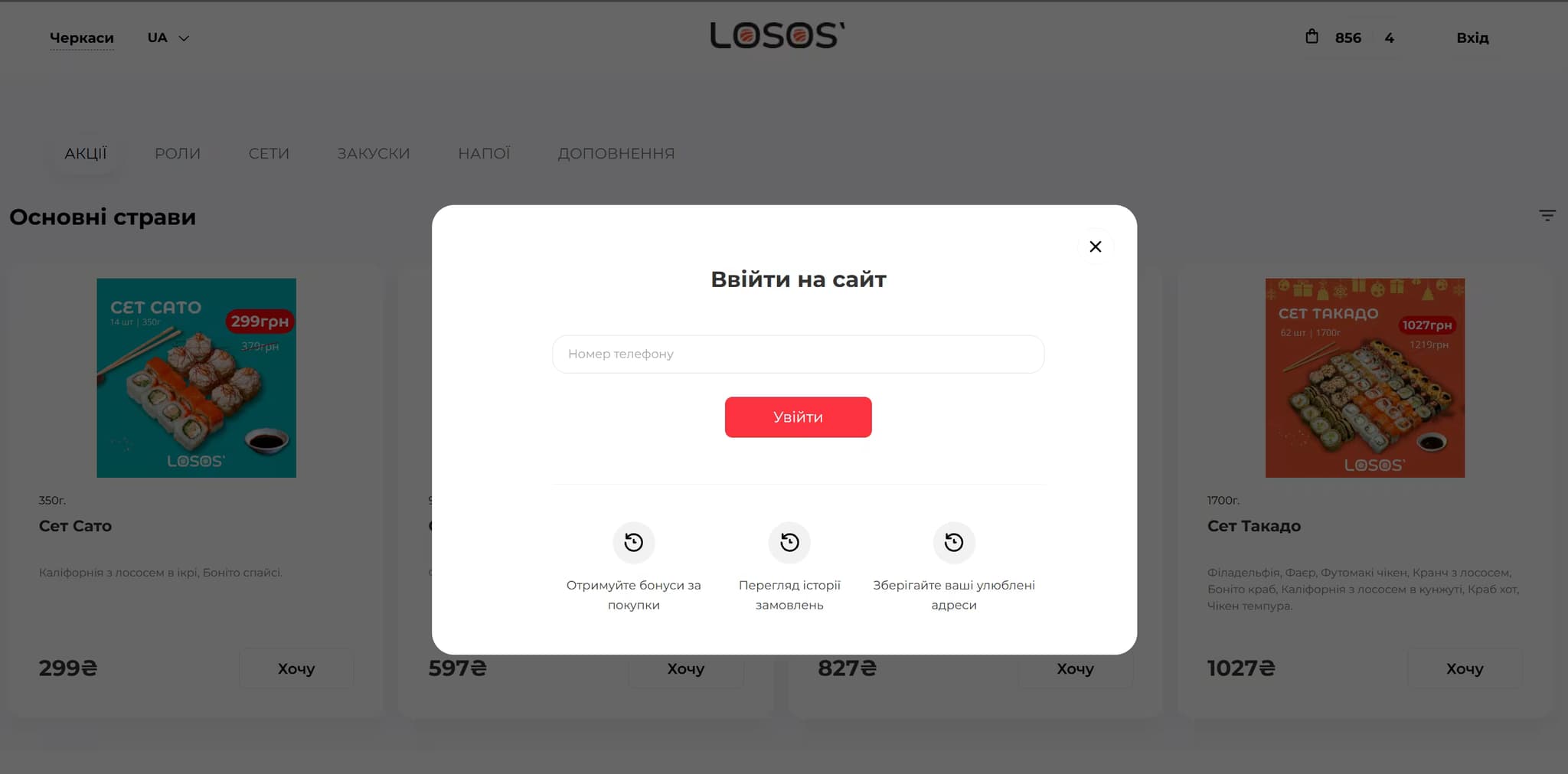
Access control for certain pages and actions was implemented using Firebase permissions, allowing the client to restrict features based on user roles or behavior.
Admin Panel
Losos also includes a dedicated admin panel, where staff can:
Add, edit, and remove products
Manage categories
Update SEO titles and metadata
Configure addresses and service areas
Control discounts and promotions
Separating the public website and the admin panel made the system more flexible and easier to scale.
Result
The project was successfully delivered, and the client was satisfied with both performance and usability. The website continues to serve real customers and has proven to be reliable under heavy load — in production, it handled 10,000+ concurrent user requests without critical issues.
This project was an important milestone early in my career and gave me valuable experience in building production-ready, high-performance web applications with real business requirements.
Next Project
Wow Sushi
